The highest quality Himalayan salt

Ancient Ocean® by SaltWorks® is the highest quality Himalayan Pink salt in the world due to its depth of flavor and beautiful color that ranges in shades of delicate pink to dark rose. Unlike other brands, Ancient Ocean goes through several all-natural processing methods and food safety measures that guarantee its superiority and beauty—all while leaving its prized trace minerals intact.

Ancient Ocean Coarse Grain

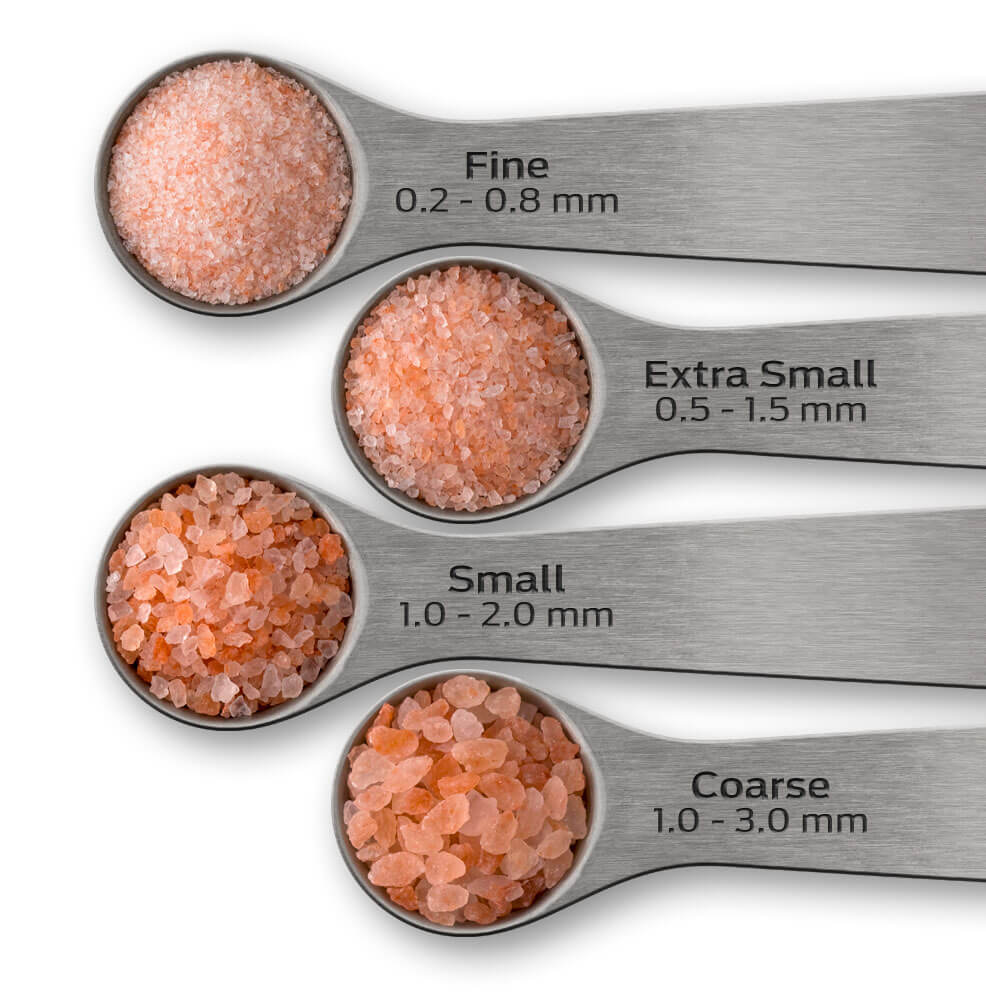
Fine grain (0.2 - 0.8 mm)


Ancient Ocean Coarse Grain

Extra Small grain (0.5 - 1.5 mm)
Small grain (1.0 - 2.0 mm)


Ancient Ocean Coarse Grain

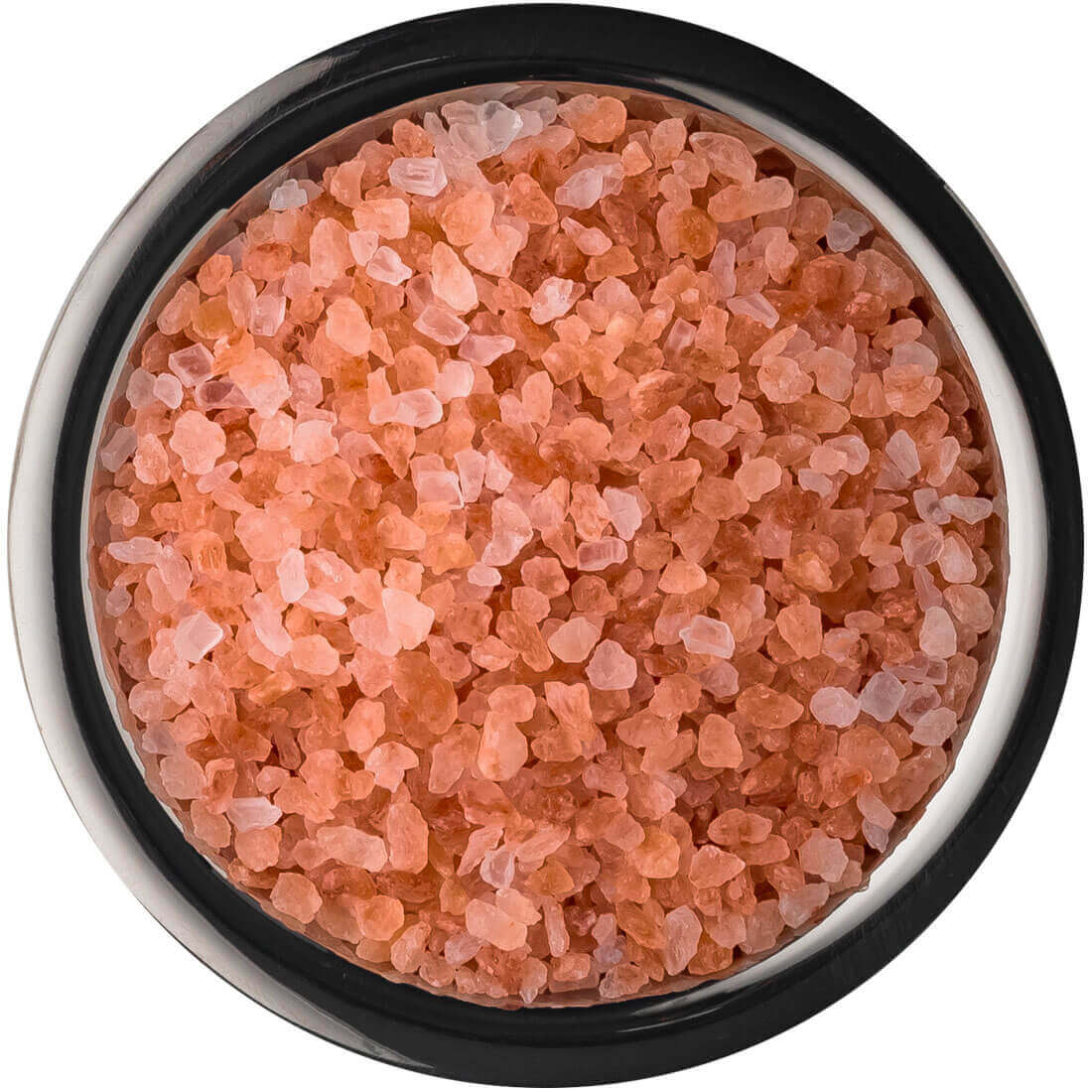
Coarse (1.0 - 3.0 mm)

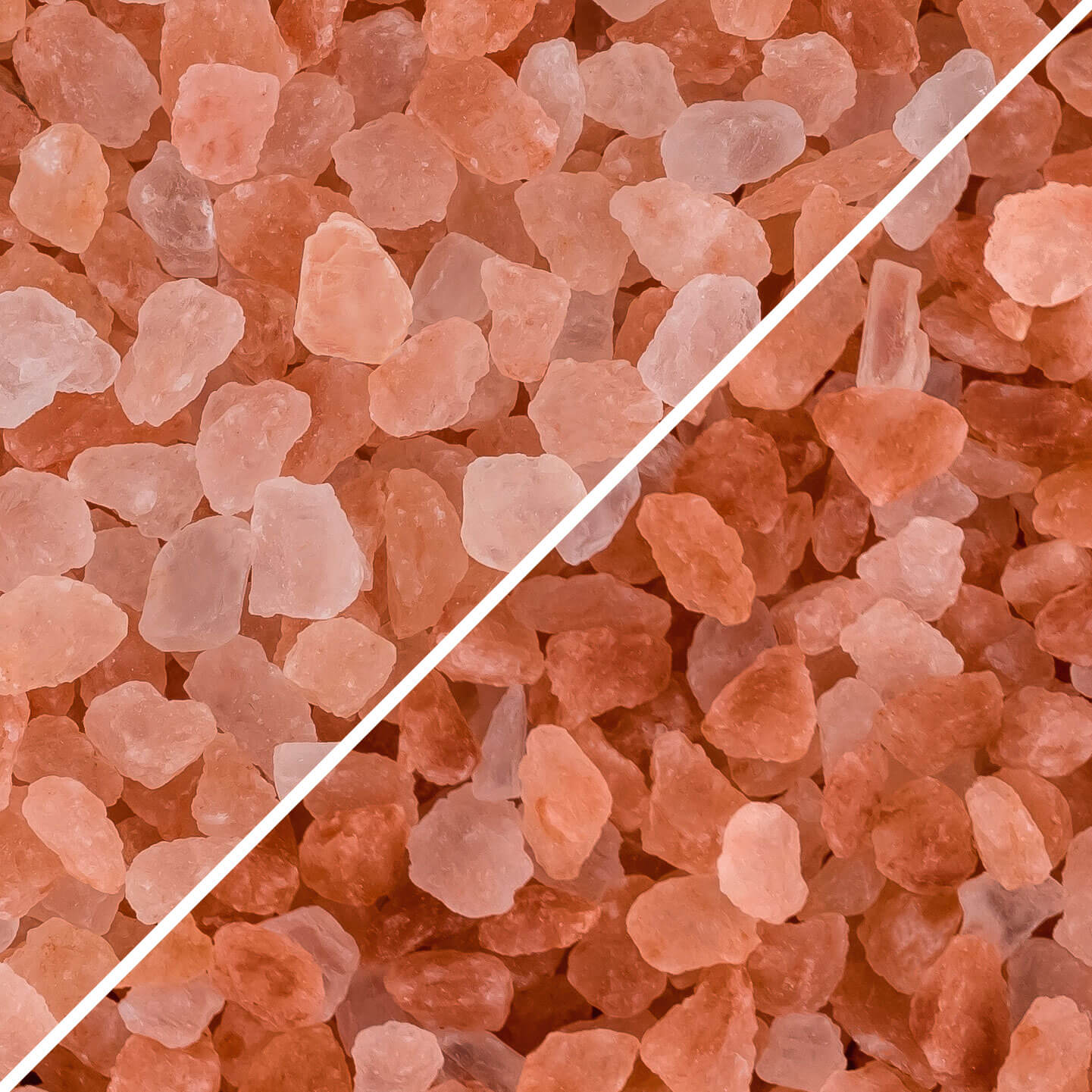
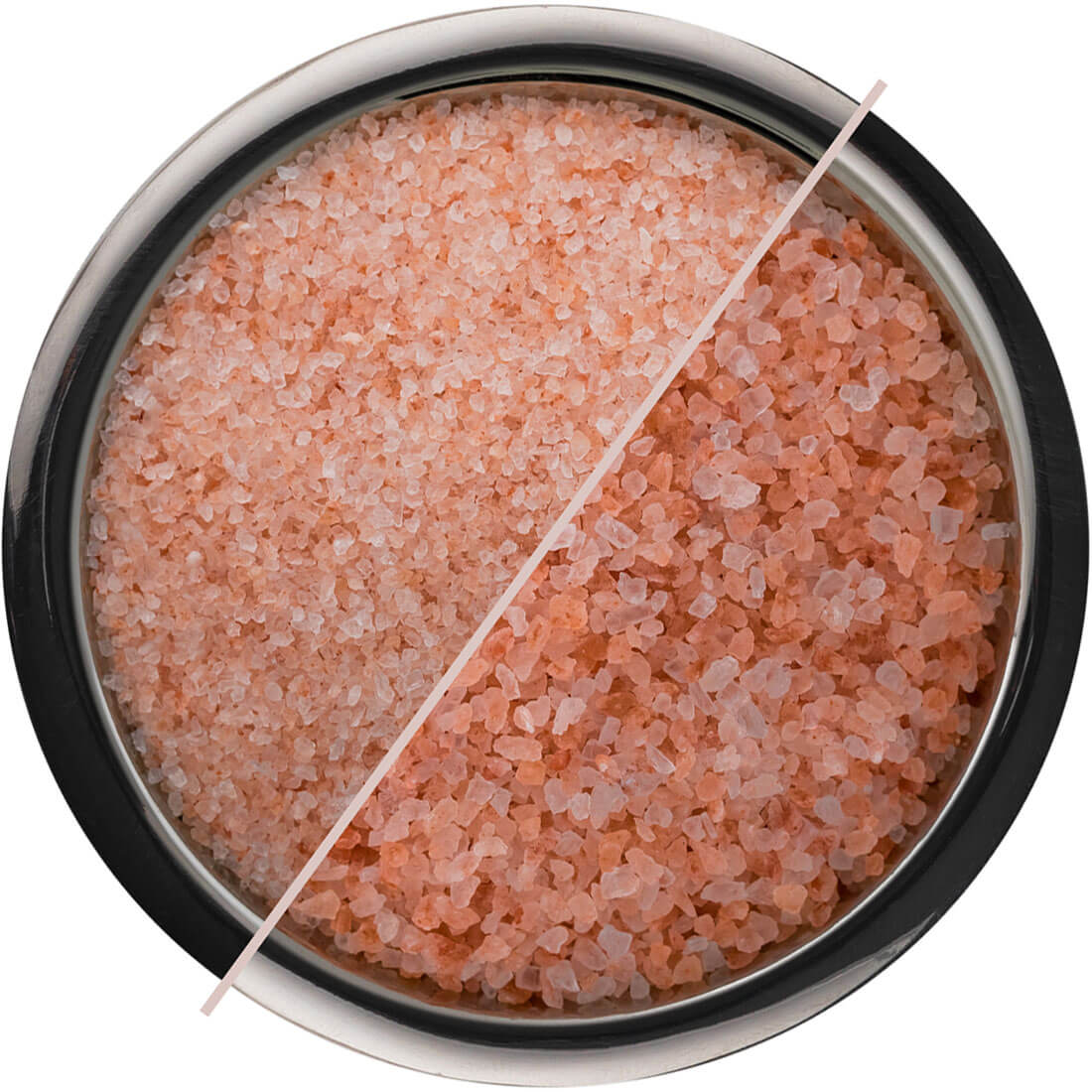
Correctly processed high-quality Himalayan salt will range in color from light white to shades of pink and light red. When backlit, every crystal should be slightly translucent. Any solidly opaque particles are not salt.
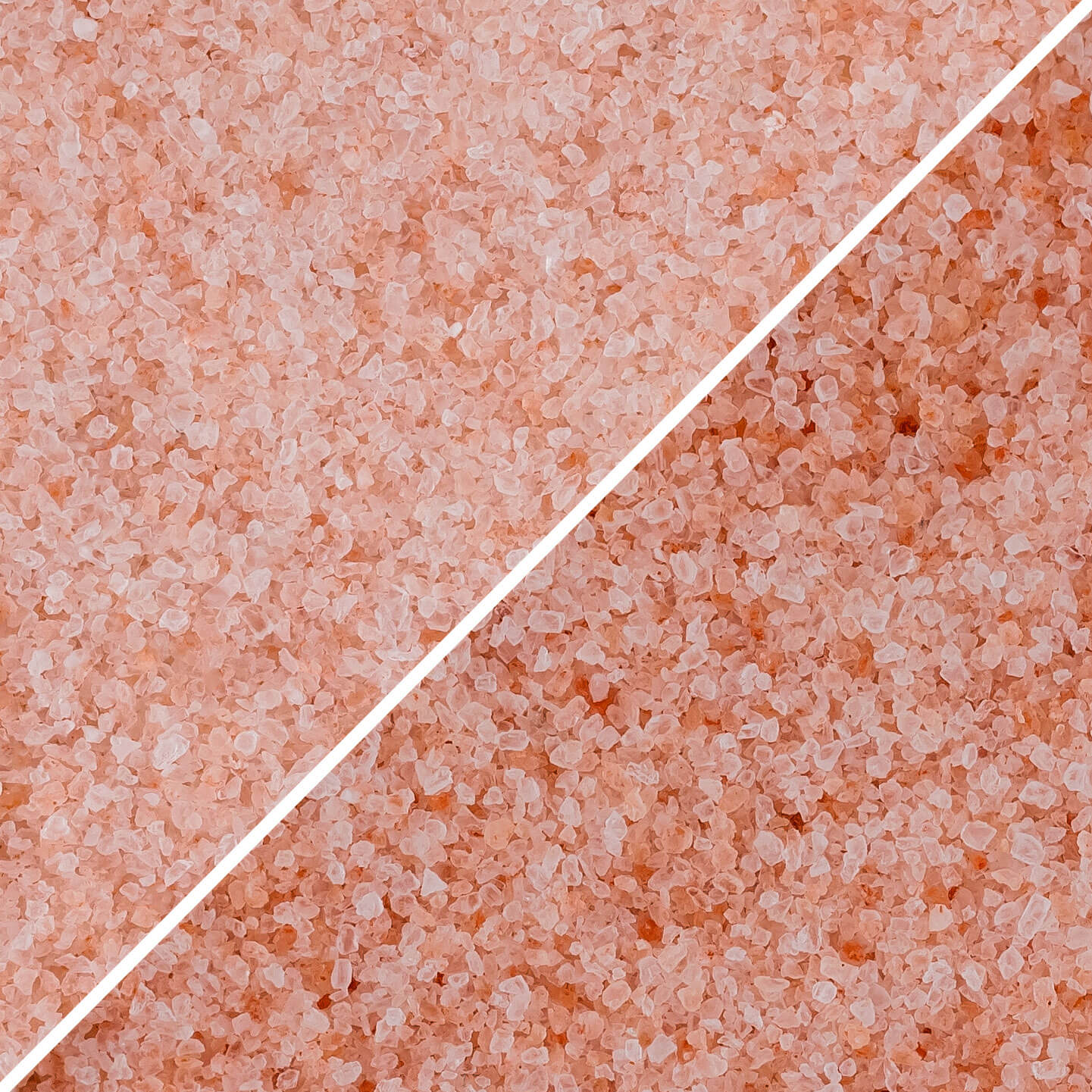
Fine Grain

Color Range - Fine Grain

Small Grain

Color Range - Fine Grain

Coarse Grain

Color Range - Fine Grain

Close up of a raw Himalayan salt slab

Himalayan Pink salt is the result of an ancient body of water that slowly evaporated over millions of years, leaving behind mineral-rich salt fused with natural clay, stone and other foreign material. Completely separating the salt from these elements requires several levels of careful processing.

Clear Salt
Light Pink Salt
Pink Salt
Red Salt
White Salt
Black Rock
Grey Rock
White Rock
Pink Clay
Red Clay
White Clay
Slab cross-section of raw Himalayan pink salt showing inclusions

Perfecting Ancient Ocean®

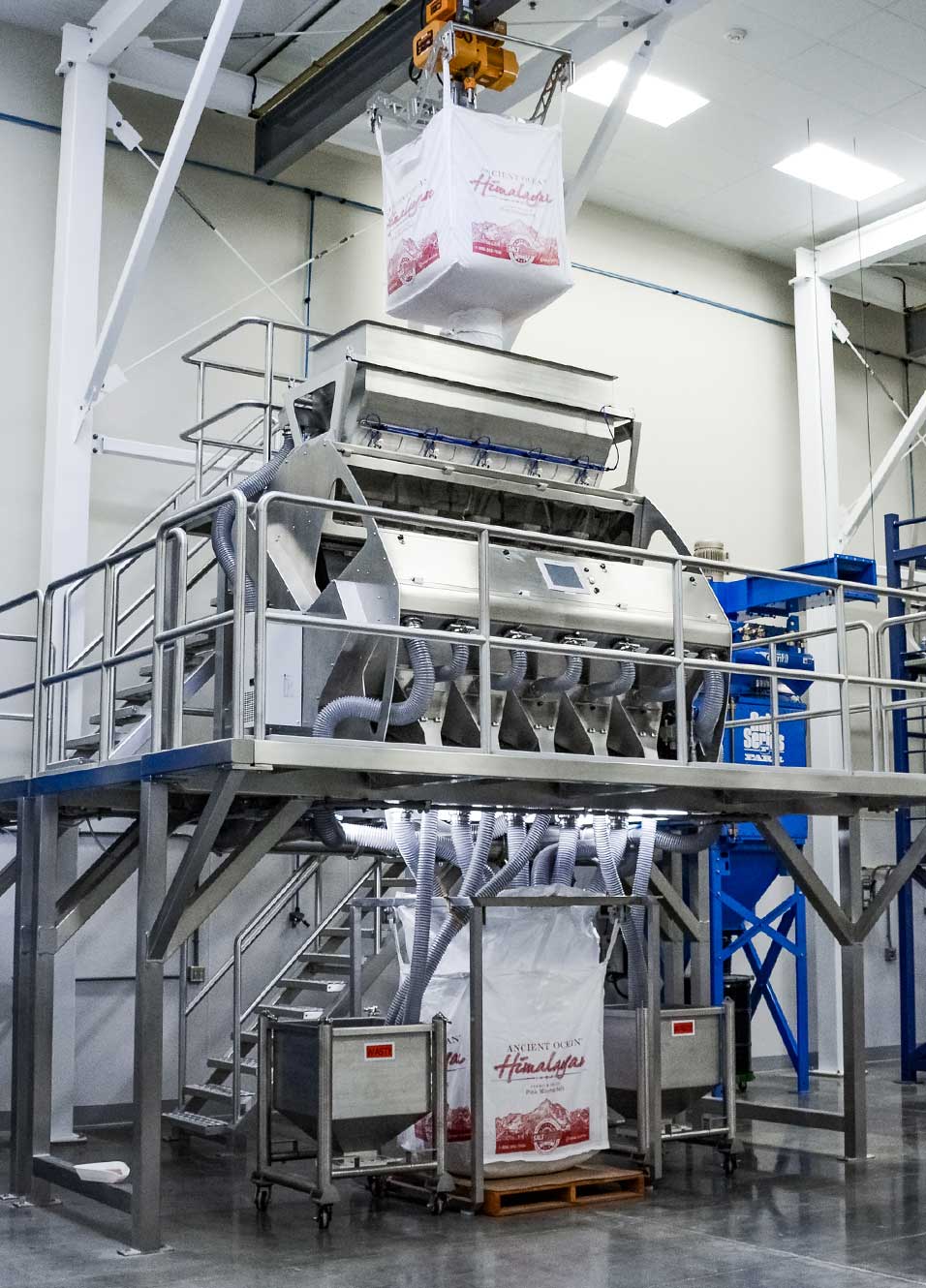
  • Optical Color Sorting: Detects particles that mimic the appearance of salt (like clay, stone and rock) as well as salt crystals that have inclusions or may otherwise be less desirable. Once identified, this material is instantly removed with a targeted burst of air.
  • Rare Earth Magnets: Any ferrous metal and magnetic contamination is removed by the strongest rare earth magnets in the industry.
  • Aspiration: Removes objects lighter than the salt, such as plant matter, fibers, wood and other undesirable materials.
  • Metal Detection: In addition to rare earth magnets, the salt goes through a final metal detection step to ensure that the processed and packaged salt is free of ferrous and non-ferrous metals.
  • Sieving: The salt is specially sieved to exacting sizes, ensuring consistency every time.

What gets left behind?

Rocks

Rocks

Clay

Clay

Insolubles

Insolubles

Inclusions

Inclusions

Optically Clean Technology

Optically Clean® technology distinguishes Ancient Ocean® as the purest on the market. Here's why:

  • Extensive proprietary processes eliminate foreign materials such as metals, sticks, sand, rocks, clay, flawed crystals and other insoluble matter, ensuring all that’s left is 100% natural salt.
  • No chemicals or artificial processing agents are ever used, leaving the salt just as pure as the day it was harvested and its prized mineral content intact.
  • Every grain is reviewed for quality using high-definition cameras.
  • Custom-engineered equipment can detect undesirable foreign particles that are smaller than a grain of sand.
  • If foreign material or a flawed grain is detected, a targeted burst of air instantly removes it from production.

This process results in clean, mineral-rich sea salt that is ready for use in food manufacturing.

Inclusions (insoluble materials)

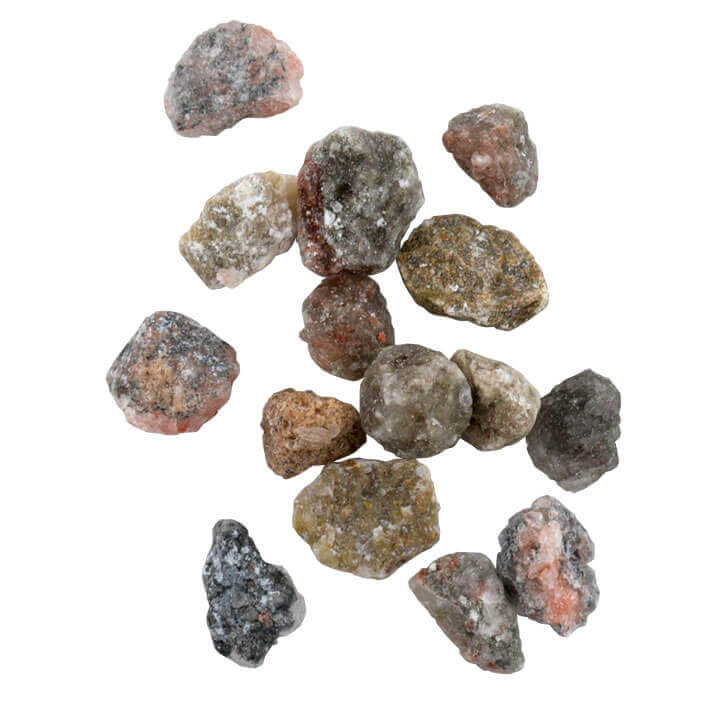
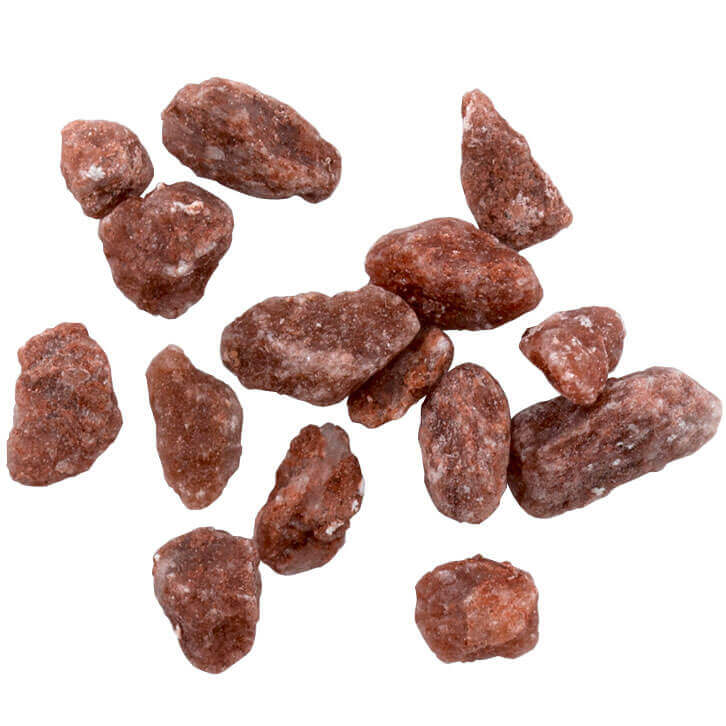
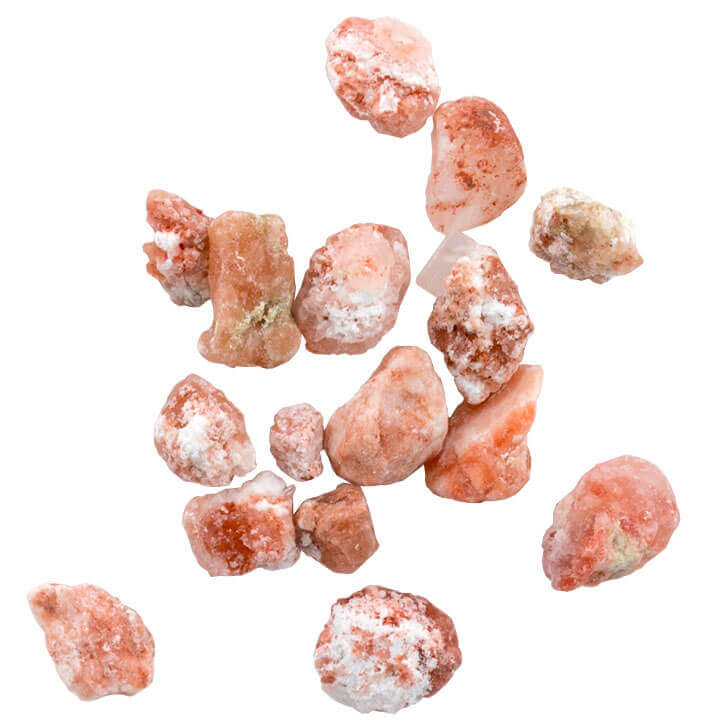
It's easy to identify fibers, clay or stone particles, and lesser quality salt grains that may have stone inclusions. Grains that are opaque red, white, gray and brown are inedible or insoluble materials. These inclusions can negatively impact the flavor of the salt and hinder the salt's performance in grinders and mills by damaging the grinding mechanisms.


Dust

Powder and dust is common in lower quality Himalayan salt. SaltWorks sifts out raw salt dust powder, and all salts are also de-dusted prior to packaging to remove any excess dust created during processing.


Flavor

The flavor should be salt-forward with a slight but distinct minerality. A clay-like flavor and gritty texture indicate a lower-quality salt that includes impurities.

Himalayan in measuring spoons

Questions to ask your salt supplier

Source Buyers should ask if the raw salt supplier is:
checkbox Registered with the FDA?
checkbox In compliance with new FSMA regulations?
checkbox What additional safety and quality standards and certifications do they hold? (Such as: Not employing child labor, providing fair wages, providing healthcare and education to the miners, etc.)
checkbox Is the raw salt is "single source" — from one mine and a single, trusted and reputable raw salt supplier. Single-source ensures consistent quality and supply.
Facility Buyers should ask the following about salt processing and packaging facilities:
checkbox How is the salt transported to the facility?
checkbox Where is the salt processed? (Is the facility located in the US or overseas?)
checkbox Is the facility third-party audited? By what certifying body?
checkbox What food safety certifications do you hold? Does the facility meet GFSI (the Global Food Safety Initiative) and HACCP (Hazard Analysis and Critical Control Points) requirements?
checkbox What GMPs (Good Manufacturing Practices) have been implemented?
Optically Clean Technology

We've dedicated our lives to bringing the best tasting, cleanest salt to our customers worldwide. We're passionate about perfecting salt naturally while preserving the flavor profiles, textures and characteristics that make each salt unique.